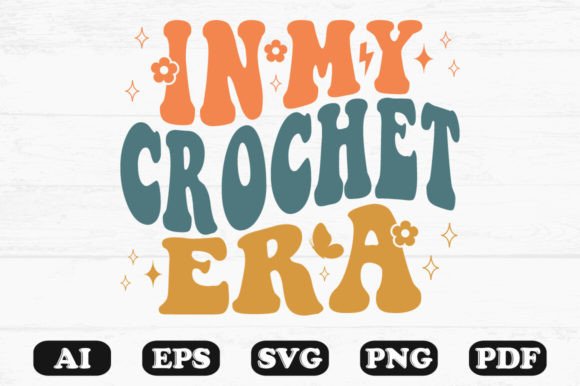
In My Crochet Era Retro Wavy SVG
First Impressions: A Nostalgic Curve with Craftsmanship Potential
When I opened In My Crochet Era Retro Wavy SVG, I didn’t just see typography—I saw rhythm. The wavy baseline, soft vintage weight, and subtle retro spacing immediately evoke handmade charm without tipping into kitsch. It’s not a loud design; it’s a confident whisper of craft culture—perfect for makers who want their products to feel intentional, warm, and quietly memorable. As an embroidery designer who’s stitched hundreds of text-based motifs, I appreciated how the curves avoid tight serifs or fragile terminals. That means fewer stitch breaks, cleaner satin edges, and better legibility at 3–4 inches wide—the sweet spot for tote bags, aprons, and baby onesies.
A Real-World Test: Embroidering This on a Linen-Cotton Kitchen Towel
Last week, I used In My Crochet Era Retro Wavy SVG for a small-batch kitchen towel line sold in my local boutique. I converted it to an embroidery file, sized it to 3.75″ wide, and stitched it across the lower corner of a medium-weight linen-cotton blend. The result? Crisp, flowing lettering with no skipped stitches—even where the wave dips lowest. Because the design avoids ultra-thin strokes or overlapping letters, the fill stitch settled evenly without puckering. Customers noticed it instantly: “It feels like something my grandma would’ve crocheted *and* printed on her favorite tea towel.” That emotional resonance is gold for craft businesses—and it starts with smart design choices like those in In My Crochet Era Retro Wavy SVG.
Where It Shines (and Where to Pause)
In My Crochet Era Retro Wavy SVG works beautifully for:
- Custom apparel: Sweatshirts, relaxed-fit tees, and oversized totes—its gentle curve follows garment drape naturally.
- Baby and nursery items: Embroidered on organic cotton burp cloths or muslin pillow covers, it reads as tender and timeless—not cutesy or dated.
- Embroidered patches: Clean outlines and consistent stroke width make it ideal for iron-on or sew-on versions.
- Holiday and gift embroidery: Paired with simple florals or crochet-inspired motifs, it adds personality to handmade Christmas stockings or bridal shower towels.
- Etsy listings and digital product previews: Its strong visual identity translates well into printable mockups and lifestyle photos—no extra styling needed.
But here’s where attention matters:
- Small hoop sizes: Below 3″ wide, the wave’s subtlety can flatten. Test at your smallest working hoop first.
- Stretchy or thin fabric: Use cutaway stabilizer underneath—especially for knits or lightweight rayon. The curve relies on even tension to hold its shape.
- Dark or textured fabrics: Avoid placing it over heavy slubs or bouclé without testing thread contrast. A matte ecru or oatmeal thread often reads warmer and clearer than stark white.
- Curved surfaces like caps: The wave may compress slightly on the front panel. Consider slight horizontal compression (2–3%) in your digitizing software—or reserve it for flat panels only.
What This Design Says About Your Brand—Before a Single Stitch
Choosing In My Crochet Era Retro Wavy SVG isn’t just about aesthetics—it’s a quiet signal to your customers. It tells them you value continuity between craft traditions and modern making. For Etsy sellers, that builds trust: buyers recognize authenticity in the curve, not just the content. For small shop owners, it elevates a plain tote into a signature piece—something repeat customers seek out. And for embroidery designers offering custom work, it’s a versatile anchor design: pair it with a single daisy motif for spring, swap thread colors for holiday palettes, or layer it beneath a monogram for wedding gifts. Its strength lies in flexibility—not flashiness.
Practical Designer Notes You’ll Want to Keep Handy
Before stitching In My Crochet Era Retro Wavy SVG into your next project, do these five things:
- Test on scrap fabric—same type and weight as your final product. Watch how the wave holds on seams or hems.
- Check thread color contrast in natural light *and* under warm bulb lighting. Some creams read gray in shade; some navies turn black indoors.
- Review stitch density. If your embroidery file feels overly dense in the curved sections, reduce fill stitch % by 5–8%—it often improves drape and wash durability.
- Confirm hoop size compatibility. While the SVG itself is scalable, your embroidery file must match your machine’s maximum stitch area. Don’t assume.
- Verify licensing before selling finished embroidered items or bundling this as part of a digital product. Since it’s listed under Graphics and Crafts, confirm whether commercial use is included—especially if you’re an Etsy seller or craft business.
Final Thought: Not Just a Quote—A Craft Statement
In My Crochet Era Retro Wavy SVG doesn’t shout. It sways. And in a market flooded with sharp-edged fonts and aggressive slogans, that gentle motion is its greatest asset. It belongs on pieces meant to be held, used, gifted, and kept—not scrolled past. Whether you’re stitching a single personalized baby blanket or building a cohesive line of boutique merchandise, this design supports intention over impulse. It’s the kind of embroidery file that makes customers pause, smile, and say, “I get it.” And for crafters, small shop owners, and embroidery designers alike—that’s not just good design. It’s good business.