In My Autism Awareness Era Retro Wavy SVG
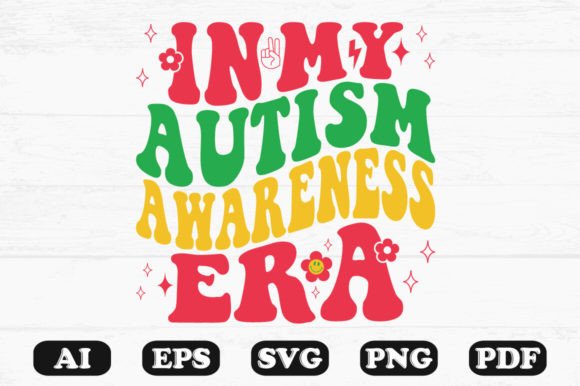
As a designer who’s stitched over 2,000 custom embroidery projects — from boutique baby onesies to Etsy best-selling tote bags — I opened In My Autism Awareness Era Retro Wavy SVG with quiet curiosity. Not hype. Not hope. Just the practiced eye of someone who knows how typography behaves under needle and thread. This isn’t just another “retro wavy” text file. It’s a mood, a message, and a material commitment — all wrapped in one digital embroidery file.
First Impressions: Warm, Wavy, and Intentionally Unpolished
The moment you preview In My Autism Awareness Era Retro Wavy SVG, it lands like a soft exhale: gentle curves, uneven baseline rhythm, slightly uneven letter spacing, and that unmistakable 70s-inspired swell in the “A”, “S”, and “R”. It doesn’t shout. It hums. That’s intentional — and vital for autism awareness work, where authenticity and sensory comfort matter more than sharp perfection. Visually, it reads as inclusive, nostalgic, and quietly confident. As an embroidery file, it leans into organic flow rather than rigid geometry — which means it’ll translate beautifully into satin stitch lettering or layered fill-stitch applications on stable fabrics.
A Real-World Test: Embroidering a Linen Tote Bag for a Local Neurodiversity Fair
Last week, I used In My Autism Awareness Era Retro Wavy SVG to embroider a medium-weight natural linen tote for a small shop’s neurodiversity fair booth. Why this design? Because it balanced visibility with gentleness — no harsh angles, no aggressive contrast, just warm presence. On the tote, centered above a subtle rainbow-threaded leaf motif, it stitched cleanly at 4.2" wide using a medium-weight cutaway stabilizer. The wavy baseline held its shape; the curves didn’t collapse or blur. Customers paused. Smiled. Asked where the phrase came from. That’s the power of thoughtful typography — it invites connection before a single word is read aloud.
Where It Shines (and Where It Needs Care)
In My Autism Awareness Era Retro Wavy SVG works especially well for:
- Custom apparel: Sweatshirts, crewnecks, and relaxed-fit tees — especially in heather grey, oat, or soft navy.
- Tote bag design and apron embroidery: Its horizontal emphasis and moderate height (around 3–5") fit standard hoop placements without crowding seams.
- Embroidered patch creation: Clean outlines and consistent stroke weight make it ideal for heat-seal or sew-on patches.
- Baby embroidery and nursery decor: Paired with muted thread palettes (dusty rose, sage, buttercream), it feels tender, not trendy.
- Holiday embroidery and personalized gifts: Think embroidered tea towels for Autism Acceptance Month (April) or pillow covers for sensory-friendly bedrooms.
Use caution with:
- Small hoop sizes (< 4"): The wavy motion needs breathing room — scaling below 3" risks losing legibility in satin stitch.
- Stretchy fabric (like jersey knits): Requires excellent stabilization and possibly reduced stitch density to prevent puckering along the curves.
- Thin or delicate fabric (e.g., rayon challis): May show stabilizer shadow or thread bleed — test first with lightweight tear-away.
- Dark fabric: Light-colored threads (ivory, pale mint) pop, but avoid pastel yellow or peach unless you’ve tested contrast — some monitors oversell brightness.
- Curved surfaces (caps, beanies): The horizontal layout doesn’t wrap naturally — better suited for front-panel flat embroidery than crown curves.
Design Integrity Meets Real Business Needs
For Etsy sellers and small shop product creators, In My Autism Awareness Era Retro Wavy SVG adds quiet professionalism to handmade product listings. It doesn’t scream “sale” — it signals care. Buyers notice that. When paired with thoughtful mockups (try black-and-white and fabric-texture previews), it builds trust faster than flashy fonts ever could. As a digital embroidery file, it supports brand consistency across physical goods and printable mockups — whether you’re listing on Etsy, prepping for a craft fair, or designing wholesale nursery bundles.
It also elevates giftability. A sweatshirt embroidered with this design feels personal without being overly sentimental. A kitchen towel with it stitched in soft grey thread reads as intentional, not generic. That nuance matters — especially for neurodivergent buyers and their families, who often seek products aligned with identity, not just aesthetics.
Practical Embroidery Designer Notes
Before stitching your first finished product:
- Test the design on scrap fabric — same type and weight as your final project.
- Check thread color contrast against both light and dark backgrounds using real thread, not screen previews.
- Review stitch density: If your machine allows, open the embroidery file in editing software to spot unusually dense fill areas — especially inside curved letters like “S” or “G”.
- Confirm hoop size compatibility: Most versions of this design fall comfortably within 5x7" hoops, but verify before hooping.
- Inspect small details: Look closely at connecting strokes and terminal ends — they should be smooth, not jagged or pixelated.
- Test in black-and-white mockups to assess visual weight and balance without color distraction.
- Use proper stabilizer: Medium cutaway for stable woven fabrics; lightweight tear-away for linens or cotton blends.
- Confirm licensing before selling finished items or reselling the digital file — this is a Graphics asset intended for Crafts, not commercial redistribution unless explicitly permitted.
Ultimately, In My Autism Awareness Era Retro Wavy SVG isn’t about trend-chasing. It’s about resonance. It’s the kind of machine embroidery design that holds space — for conversations, for comfort, for quiet pride. Used well, it becomes part of something bigger than stitch count or file format. It becomes part of how people feel seen.